What Are Cargo Straps and How Do They Work?
Cargo Straps help keep cargo stable during transport, whether a driver is securing boxes in a van or equipment on a trailer. They work by connecting a load to suitable anchor points and applying controlled tension. The strap presses the cargo toward its support surface, helping limit movement during braking, turns, and road vibration. A strap is not magic. Poor positioning or weak anchor points can still allow a load to shift.
Most cargo straps use strong webbing with a buckle, such as a ratchet or cam buckle. A ratchet tightens the webbing through a winding mechanism; a cam buckle holds it when the strap is pulled through. The right option depends on the load, the available anchors, and the instructions supplied by the manufacturer. Check the strap’s working-load information, distribute tension carefully, and protect webbing from sharp edges. Small details matter.
Before a trip, inspect the webbing for cuts, fraying, heat damage, or worn stitching, and check that buckles operate smoothly. Secure the load without crushing fragile items, then recheck tension after the cargo settles. I have seen a neatly tightened strap look reassuring while its hook sat at an awkward angle; appearance alone is not proof of securement. That is an easy detail to miss. This guide explains what cargo straps are, how their parts work together, and how to choose and use them with care. Proper setup takes attention, and no single strap arrangement suits every load.
What Cargo Straps Are and What They Are Made Of
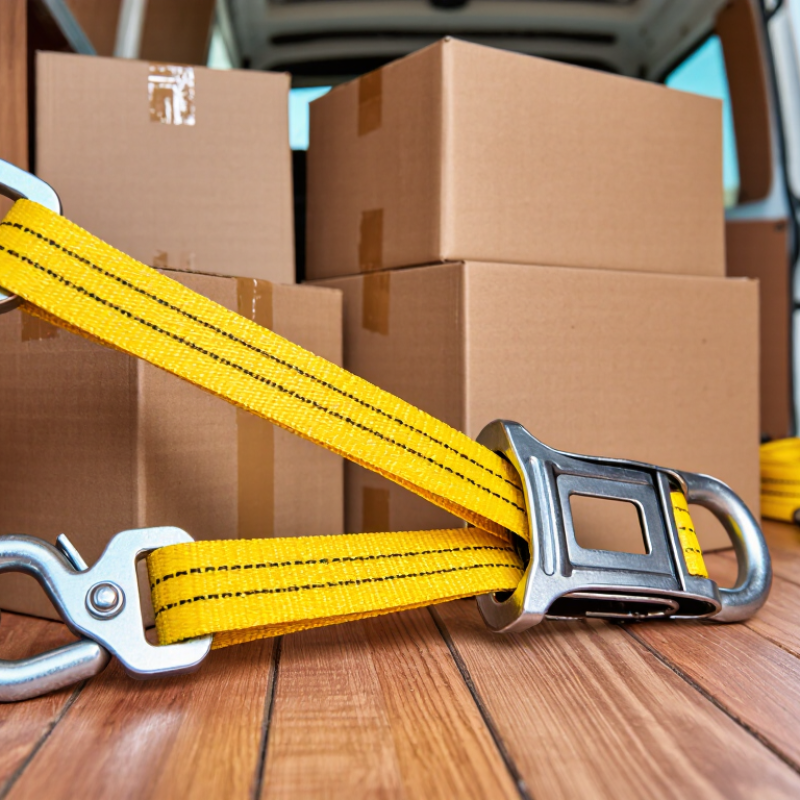
Cargo straps are flexible webbing assemblies used to hold cargo in place during transport or storage. A typical strap has a long woven band, a buckle or tensioning device, and sometimes hooks or loops at its ends. The webbing passes around or over an object, then tightens to limit shifting. They are not lifting slings; their construction and rated use may differ. That distinction matters.
Most cargo straps use polyester webbing because it resists stretching and handles moisture reasonably well. Nylon is stronger in some applications but can stretch more, especially when wet. Polypropylene is lightweight and often economical, though it may wear faster under demanding conditions. The fibers are woven into a flat band, with tightly formed edges that help resist fraying. Look closely. A fuzzy edge, cut fibers, or faded rating label can be a warning, even when the strap still feels sturdy.
Hardware is commonly made from steel or aluminum. Ratchets use a handle and gears to increase tension, while cam buckles hold webbing through a spring-loaded gate. End fittings may include hooks, rings, or sewn loops. Material alone does not determine suitability: webbing width, stitching, hardware strength, and the stated working load limit all matter. I would not judge a strap by appearance alone; that is an easy mistake. Check its label and condition before use, and replace one with damaged webbing or distorted fittings.
What Are Cargo Straps and How Do They Work?
Cargo straps are webbing assemblies used to restrain loads. The webbing is commonly made from synthetic fibers such as polyester, nylon, or polypropylene; a tensioning device and end fittings help secure it to anchor points.
Approximate typical fiber elongation at break. Values vary by fiber construction and manufacturer; they are not cargo-strap working load limits or the amount a secured load will stretch.
The Main Components of a Cargo Strap
A cargo strap is a simple assembly, but each part affects how securely it holds a load. The webbing is the flat, woven section that passes over or around the cargo. Polyester webbing is commonly used because it stretches relatively little and handles everyday moisture well. Its width and rated capacity matter; a narrow strap should not be treated like a heavy-duty one. Look closely at the edges. Fraying, cuts, or melted spots can weaken the fibers.
The tensioning device tightens the webbing. A ratchet handle pulls it snug through a spool, while a cam buckle uses a spring-loaded plate to grip the strap. Ratchets can create greater tension, so forcing the handle may damage the load or the strap. Small adjustments are safer. Hooks or other end fittings connect the strap to suitable anchor points. They should sit fully in place, not balance on an edge. Stitching joins the webbing to fittings and helps carry the load; loose or broken threads deserve attention. A sewn-on capacity label provides useful limits, though it can become hard to read after years of use. That is easy to overlook. I would not rely on appearance alone when a strap’s history is unknown. Check every component before tightening, and replace a strap with damaged webbing, fittings, or stitching.
What Are Cargo Straps and How Do They Work? – The Main Components of a Cargo Strap | Component | What It Is | How It Works | Practical Check |
| Webbing | The flat, woven strap, commonly made from polyester for cargo tie-downs. | Runs around or across the load and transfers tension from the tightening mechanism to the cargo and anchor points. | Check for cuts, fraying, melted areas, chemical damage, and damaged stitching. Keep it away from sharp edges or use suitable edge protection. |
| Ratchet buckle | A metal tensioning assembly with a handle, rotating spool, and locking mechanism. | Moving the handle turns the spool and winds in the webbing, increasing tension. The pawls engage the ratchet teeth to help prevent the handle from unwinding. | Confirm the handle and locking parts move freely and engage securely. Release tension carefully according to the buckle’s instructions. |
| Cam buckle | A buckle containing a spring-loaded cam that grips the webbing. | Pulling the free end tightens the strap; the cam presses against the webbing to resist slipping. It is tightened by hand rather than by a ratchet handle. | Check that the cam grips the strap and the webbing is threaded through the buckle in the correct direction. |
| End fittings | Hardware attached to the strap ends, such as hooks, rings, or other connectors. | Connect the strap to compatible vehicle or load anchor points so tension can be applied across the load. | Use fittings that match the anchor points. Check for cracks, bending, heavy corrosion, or other damage before use. |
| Stitching and attachment points | Reinforced seams that secure hardware or form loops in the webbing. | Help transfer force between the webbing and its end fittings or sewn loops. | Look for broken, loose, or heavily worn stitches. Do not use a strap with compromised seams. |
| Load rating label | A label identifying the strap’s rated capacity and other relevant specifications. | Provides information needed to select and use the strap within its stated limits. Working load limit (WLL) is not the same as breaking strength. | Read the label and follow applicable cargo-securement rules. Do not estimate capacity from strap width or appearance. |
| Anchor point | A rated attachment point on a vehicle, trailer, or other supporting structure; it is not usually part of the strap itself. | Provides the fixed connection that lets the strap restrain the load when tension is applied. | Make sure the anchor is suitable, secure, and compatible with the strap fitting. A strong strap cannot compensate for a weak anchor. |
How the system works: The end fittings connect to suitable anchor points, the webbing is positioned over or around the load, and the buckle takes up slack to create tension. Correct strap selection, load placement, anchor strength, and regular inspection all affect securement.
How a Cargo Strap Secures and Holds a Load
A cargo strap holds a load by creating tension between secure anchor points. The strap runs over or around the cargo, then connects to suitable tie-down points on the vehicle or trailer. Tightening it presses the load against the supporting surface and helps limit sliding, tipping, or bouncing during travel. The exact effect depends on the load’s shape, weight, and contact with the deck.
Ratchet straps use a handle and spool to draw in webbing in small increments. Cam-buckle straps tighten when the free end is pulled through a locking buckle. Both rely on sound webbing, secure fittings, and correctly chosen anchor points. A strap should lie flat, without twists, and should not cross sharp edges unless those edges are protected. Check the strap’s working load limit and the capacity of every connected point; the weakest part sets the practical limit.
Tighten the strap until the cargo feels stable, but avoid crushing fragile items or deforming packaging. Give the load a firm hand push from different sides. It should not shift. Then recheck the tension after a short distance, since vibration and settling can loosen a setup. That step is easy to skip. I have found that neat-looking straps can still leave a load free to move, so the physical check matters more than appearance. If the cargo shifts or the webbing shows cuts, fraying, or damaged stitching, stop and reassess before continuing.
Common Types of Cargo Straps and Their Uses
Common Types of Cargo Straps and Their Uses
Ratchet straps suit heavy, rigid loads such as machinery, timber, and stacked building materials. Their ratcheting handle creates strong tension, but overtightening can crush cartons or damage painted edges. Add corner protectors where webbing crosses sharp surfaces. Cam-buckle straps tighten by hand, making them useful for lighter loads, bicycles, and furniture. They are quicker to release, though they usually provide less tension than ratchet straps. Choose strap width and hardware for the load, not just convenience.
E-track straps attach to rails inside trailers and vans, helping secure boxes, appliances, or equipment at several points. Endless-loop straps wrap around bundles without hooks, while winch straps are commonly used with flatbed loads and compatible winches.
The U.S. Federal Motor Carrier Safety Administration’s cargo-securement rule, 49 CFR 393.106(d), requires the combined working load limit of tiedowns to equal at least half the cargo’s weight. That figure is a minimum, not a reason to ignore shifting forces or weak anchor points.
Inspect webbing for cuts, fraying, and chemical damage before use. Small defects matter. A strap can look fine, yet have a compromised stitch; I would replace it rather than guess.
How to Choose and Use Cargo Straps Safely
What Are Cargo Straps and How Do They Work?
How to Choose and Use Cargo Straps Safely
Choosing a cargo strap starts with the load, not the buckle. Check the strap’s working load limit (WLL), length, and condition before loading. For U.S. road transport, FMCSA’s cargo-securement rule requires the aggregate WLL of tiedowns to equal at least half the cargo’s weight. For a 1,000-pound load, that means at least 500 pounds of aggregate WLL. Follow the equipment label and applicable rules; never treat breaking strength as working load limit. A frayed edge matters.
Route straps over stable parts of the load and attach hooks to sound anchor points. Tighten until the cargo cannot shift, but avoid crushing fragile items. Protect straps from sharp corners with edge guards. After driving a short distance, stop somewhere safe and check tension; vibration can loosen a setup. I might be tempted to trust a firm first pull. That is not a reliable test. Replace straps with damaged webbing, bent hardware, or unreadable ratings.
Tips: Match the strap to the cargo’s weight and shape. Keep webbing flat, not twisted. Use more than one tiedown when needed, and secure loose strap tails so they cannot flap or snag. Store straps dry and out of direct sunlight.