
How to Choose Bulk Impact Gloves for Global Sourcing?
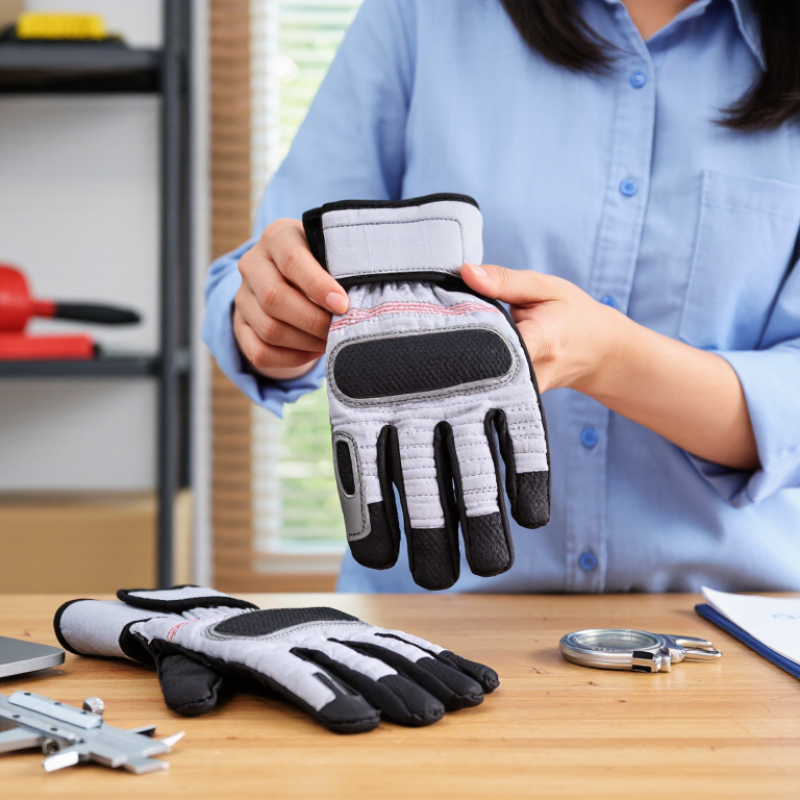
Global sourcing for Bulk Impact Gloves is not just a price comparison. A glove that looks sturdy in a catalog may feel stiff on a real hand, or leave knuckles exposed when workers handle cartons, tools, and rough metal edges. Buyers should compare impact protection, grip, dexterity, sizing, materials, and documented test results. Ask suppliers for product specifications and samples, then check stitching, fit, and palm grip under realistic tasks. Small details matter.
As a fictional sourcing adviser, Maya Chen, puts it: “A test report starts the conversation; a worker’s fit check tells you what the report cannot.” This is an editorial viewpoint, not a verified quotation from a real industry expert. Reliable decisions still need evidence: review the applicable performance standards for your market, confirm that reports match the exact glove model, and clarify inspection and quality-control procedures with the supplier. Do not assume that similar-looking products offer equal protection. Nor does the lowest unit cost always mean the best value. A poor fit can sit unused in a storeroom. That is easy to overlook.
A clear purchasing plan can reduce avoidable surprises. Define the work hazards, required sizes, expected order volume, packaging, sample-approval process, and delivery schedule before placing a bulk order. Ask direct questions, keep written records, and revisit assumptions when field feedback disagrees with the specification. Sourcing is rarely perfect. That deserves a second look.
Define Impact Risks Using EN 388:2016 and ANSI/ISEA 138-2019 Criteria
How to Choose Bulk Impact Gloves for Global Sourcing?
Impact protection should begin with the actual workplace, not a product photograph. A warehouse may involve falling cartons, while sheet-metal handling creates sharper impact risks. Record the hand position, strike direction, load weight, and contact frequency. Small details matter.
EN 388:2016 reports mechanical protection through a coded result. Its impact test uses the marking “P” for a pass, “F” for failure, or “X” when the test was not performed. The impact requirement evaluates transmitted force, with an average limit of 7 kN and no individual impact above 9 kN. This is useful, but it does not describe every task. A glove can pass the test and still feel bulky near controls.
ANSI/ISEA 138-2019 gives more graduated information. It measures impact protection for the knuckle area and fingers. Level 1 allows transmitted force up to 9 kN, Level 2 up to 6.5 kN, and Level 3 up to 4 kN. Higher performance is not automatically better for every worker. It may reduce flexibility or increase heat buildup. Request independent test reports, confirm the tested glove size, and compare results across production batches. Check seams, closure strength, and finger movement from physical samples. A buyer can still make a poor decision by trusting one laboratory number. Real handling trials often reveal the missing part.
How to Choose Bulk Impact Gloves for Global Sourcing? - Define Impact Risks Using EN 388:2016 and ANSI/ISEA 138-2019 Criteria
Use the matrix below to separate mechanical hazards from impact hazards when specifying bulk protective gloves. EN 388:2016 evaluates mechanical protection, while ANSI/ISEA 138-2019 evaluates impact attenuation for the back of the hand.
| Risk or Performance Dimension | Applicable Standard | Rating Scale or Limit | Verified Technical Criteria | Typical Bulk-Sourcing Interpretation |
|---|---|---|---|---|
| Abrasion resistance | EN 388:2016 | Levels 1–4 | Minimum abrasion cycles: Level 1 = 100; Level 2 = 500; Level 3 = 2,000; Level 4 = 8,000. | Select higher levels for repeated handling, rough metal, masonry, glass, packaging, or material movement. |
| Cut resistance: coup test | EN 388:2016 | Levels 1–5 or X | Cut index thresholds: Level 1 = 1.2; Level 2 = 2.5; Level 3 = 5.0; Level 4 = 10.0; Level 5 = 20.0. “X” means not tested or not applicable. | Use as supplementary information; identify whether the blade became blunt during testing. |
| Cut resistance: straight-blade test | EN 388:2016, ISO 13997 | Levels A–F | Required force: A = 2 N; B = 5 N; C = 10 N; D = 15 N; E = 22 N; F = 30 N. | Prioritize levels C–F when sharp edges, sheet metal, stamped parts, or glass create a serious cut hazard. |
| Tear resistance | EN 388:2016 | Levels 1–4 | Minimum tear force: Level 1 = 10 N; Level 2 = 25 N; Level 3 = 50 N; Level 4 = 75 N. | Higher levels help reduce tearing during snagging, pulling, and heavy-duty handling. |
| Puncture resistance | EN 388:2016 | Levels 1–4 | Minimum puncture force: Level 1 = 20 N; Level 2 = 60 N; Level 3 = 100 N; Level 4 = 150 N. | Consider higher levels for pointed components, wire, splinters, and rough castings; this is not a hypodermic-needle test. |
| Impact protection | EN 388:2016 | Optional marking: P | “P” indicates that the glove passed the EN 388 impact protection test. No P indicates that impact protection was not claimed under this marking. | Do not infer a protection level from the EN 388 abrasion, cut, tear, or puncture digits. |
| Impact attenuation level | ANSI/ISEA 138-2019 | Levels 1–3 | Maximum average transmitted force: Level 1 = 9.0 kN; Level 2 = 6.5 kN; Level 3 = 4.0 kN. | Choose Level 2 or Level 3 when the back of the hand may be struck by tools, components, or machinery. |
| Impact test coverage | ANSI/ISEA 138-2019 | Palm and back-of-hand impact zones | The standard evaluates impact attenuation on designated areas of the glove, including the palm and back-of-hand regions, using controlled impact testing. | Confirm the actual protected zones and molded-pad coverage on the approved sample before placing a large order. |
| Marking and technical-file verification | EN 388:2016 and ANSI/ISEA 138-2019 | Traceable test evidence | Request the complete EN 388 sequence, any impact “P” marking, ANSI impact level, test method, sample configuration, test date, and laboratory report. | Use pre-shipment inspection to verify size range, palm material, impact-pad placement, stitching, labeling, and packaging consistency. |
Practical Specification Guide
| Workplace Risk Profile | Suggested Minimum Direction | Procurement Focus |
|---|---|---|
| General material handling with occasional contact and low impact | Moderate EN 388 mechanical ratings; ANSI/ISEA 138 Level 1 if impact exposure exists | Comfort, dexterity, coating durability, and consistent sizing |
| Frequent handling of rough parts with regular hand impacts | High abrasion and tear resistance; ANSI/ISEA 138 Level 2 | Back-of-hand coverage, secure fit, palm reinforcement, and seam durability |
| Sharp edges combined with significant impact or pinch exposure | EN 388 cut level C–F as determined by risk assessment; ANSI/ISEA 138 Level 2 or 3 | Verify cut-test method, impact zones, flexibility, and compatibility with tools |
| Severe impact from heavy components, tools, or industrial equipment | ANSI/ISEA 138 Level 3, supported by appropriate EN 388 mechanical ratings | Validate impact attenuation on the exact glove design and confirm no loss of grip or mobility |